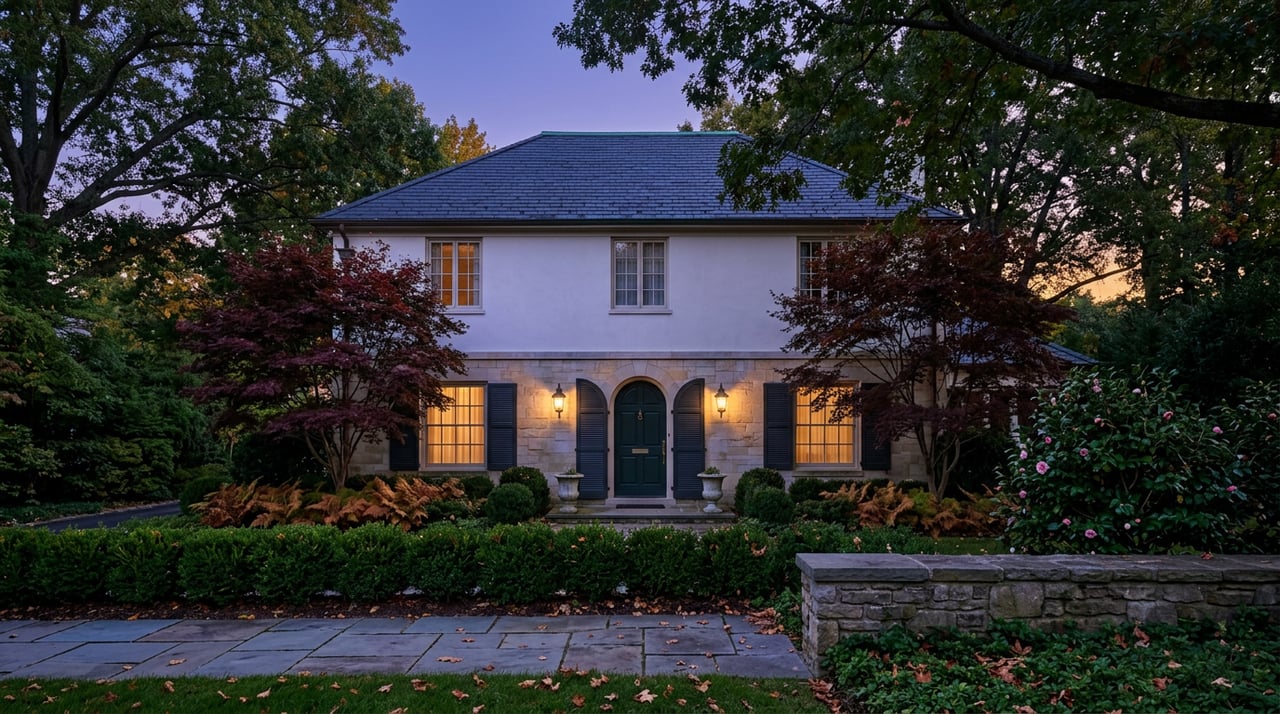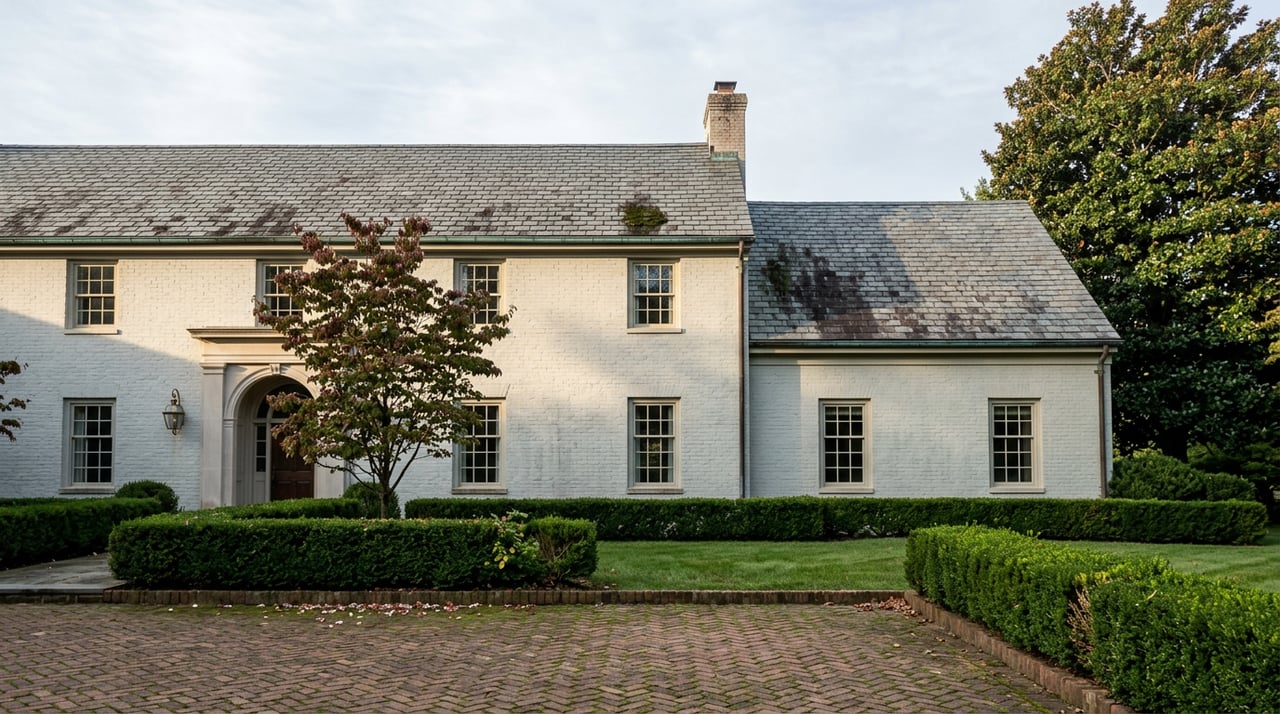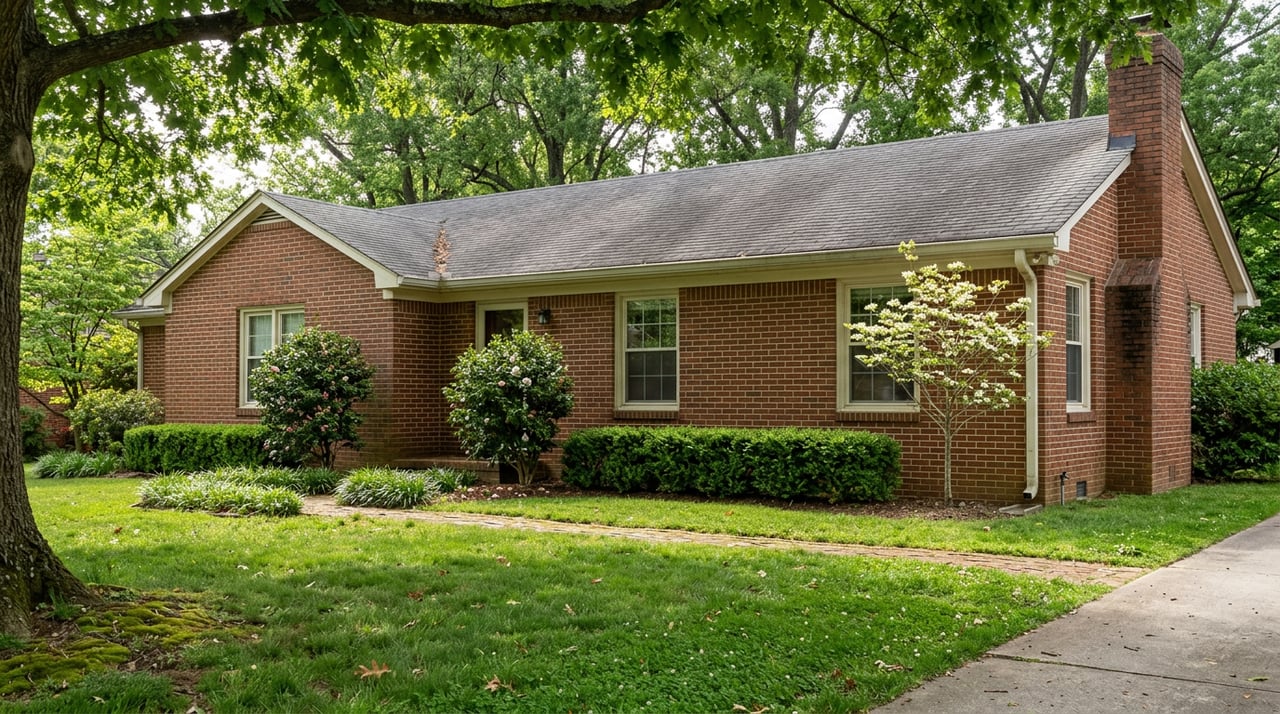
Buyers touring a teardown candidate in North Buckhead this year keep running into the same two surprises, in the same order. First, the architect's site plan comes back smaller than the napkin sketch. Then the arborist's estimate comes back larger than the one a friend got on a similar lot last year, sometimes by a wide margin. Nothing about the property changed between those two calls. The zoning district did the work in both directions, and a rule that took effect January 1, 2026 raised the stakes on the second one.
That distinction matters more than the headline number circulating around Buckhead right now.
The permit count everyone is citing
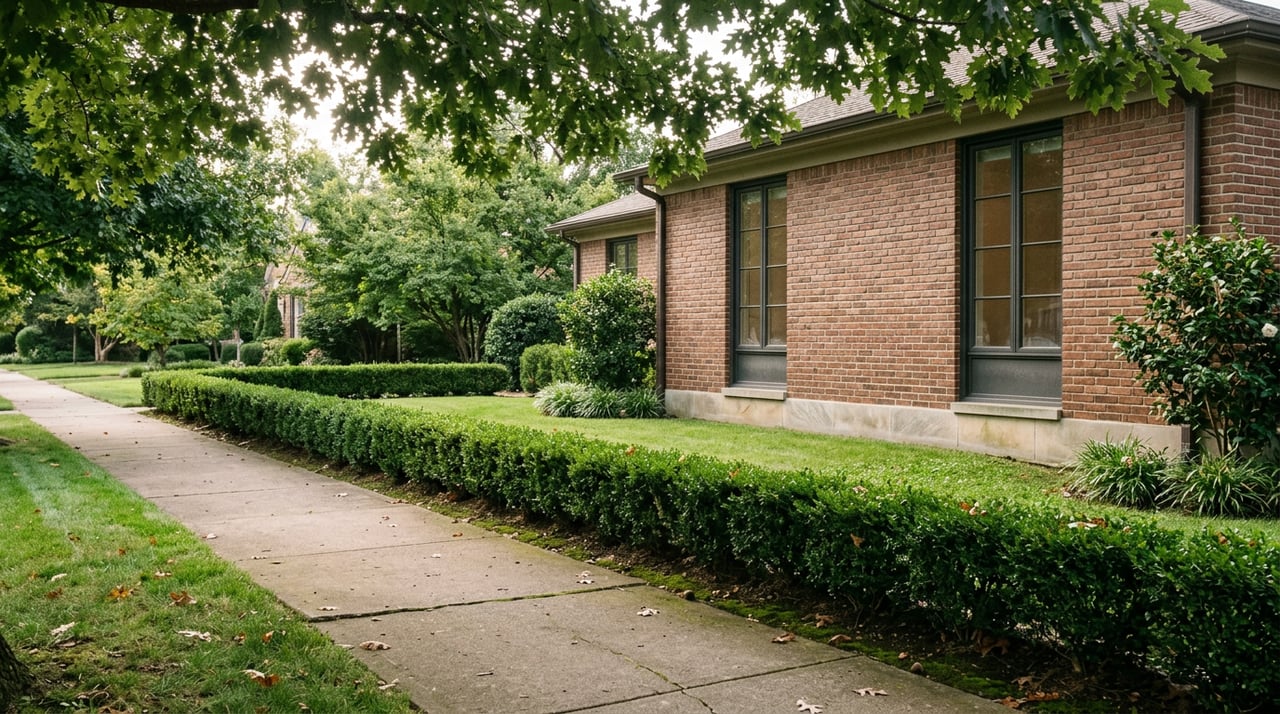
Atlanta permit records point to a real trend: teardown-rebuild filings in North Buckhead, the pocket of streets where 1960s-through-1980s brick ranches and split-levels sit on generous, tree-covered lots, have climbed by roughly four in ten over the past three years. That number gets repeated as evidence the whole submarket is a safe bet for anyone who wants new construction without leaving the neighborhood.
The number is real. It is also a count of interest, not a measure of outcome. It adds up permit applications across every zoning tier in Buckhead as if they were interchangeable, when the tier printed on a property record is what actually decides how much house a given lot can legally support and how much it costs to clear the trees standing in the way.
What the zoning tier actually controls
Buckhead's single-family streets fall under a handful of R designations, R-1 through R-5, spelled out in Chapter 16 of the Atlanta Code of Ordinances. Two numbers inside that code do most of the work on any teardown pro forma: the floor area ratio, which caps total building square footage as a share of net lot area, and the lot coverage limit, which caps how much of the lot the footprint and hardscape can occupy.
In the city's single-family districts, floor area is generally capped near half the net lot area, with a bump to as much as 0.65 (or a flat ceiling in the mid-3,000s of square feet) allowed on lots that fall under the district's minimum size. Lot coverage tops out around 55 percent. Two lots that look nearly identical from the street, similar frontage, similar price, similar canopy, can support very different finished square footage once you know which district each one sits in. That is the first surprise buyers run into, and it shows up on the architect's desk before it ever shows up in a listing description.
| Zoning tier | Typical lot character | Max floor area ratio | Max lot coverage | Tree recompense cap per acre, new lots and subdivisions (effective Jan. 1, 2026) |
|---|---|---|---|---|
| R-1, R-2 | Larger, lower-density lots | Up to 0.50 (0.65 on undersized lots) | Roughly 55% | $35,000, up from $10,000 |
| R-2A, R-3, R-3A | Smaller, denser in-town lots | Up to 0.50 (0.65 on undersized lots) | Roughly 55% | $25,000, up from $7,500 |
The second surprise, and why it is new this year
Atlanta City Council passed a full rewrite of the city's Tree Protection Ordinance on June 16, 2025, with Council member Michael Julian Bond sponsoring the measure and Council member Matt Westmoreland among its backers. The city's own statement on the passage lays out the mechanics, and most of them took effect January 1, 2026.
The change that matters most for a teardown budget is the recompense rate, the fee owed when a tree is removed without a replacement planted on site. The old formula was a flat $100 plus $30 per diameter inch. The new formula is a flat $140 per diameter inch, no base fee, no cap on the low end. Run a 20-inch tree through both formulas and the fee jumps from $700 to $2,800, a difference that shows up as a single line item on an arborist's estimate with no warning that the math changed underneath it.
The ordinance also raised fines for illegal removal from $100,000 to $200,000 per acre, and it raised the recompense caps that apply specifically to new subdivisions, new lots of record, and vacant lots that preserve a set share of existing canopy, from $10,000 to $35,000 per acre in R-1 and R-2, and from $7,500 to $25,000 per acre in R-2A, R-3, and R-3A. Livable Buckhead's explainer for residents makes the point plainly: the ordinance applies to every development plan submitted after January 1, 2026, and Buckhead feels it more than most of the city because Buckhead is overwhelmingly single-family zoned with continuous mature canopy, which is exactly the housing stock now moving through teardown permits at an elevated rate.
Put the two mechanisms together and the picture sharpens. The zoning tier sets the ceiling on what you can build. The same tier, through the ordinance's per-acre caps, has some bearing on what you'll pay to clear the way for it on qualifying new lots, while the flat per-diameter-inch fee applies more broadly to any protected tree coming down. A permit count that lumps every tier together tells you Buckhead is active. It tells you nothing about which specific lot, at which specific address, still has room to build what a buyer has in mind at a cost that holds up.
The financing layer most buyers price in last
Teardown-rebuild projects rarely close on a standard mortgage. Most run through a construction-to-permanent loan that funds the lot purchase and the build, then converts to a fixed-rate mortgage at completion, typically with 25 to 30 percent down and interest-only payments during construction. That structure works cleanly when the lender's appraiser can point to genuine finished-home comps nearby. It gets complicated in a submarket like North Buckhead, where the housing stock is a real mix of dated ranches and recent custom builds, and truly comparable finished new construction on a similarly sized, similarly zoned lot can be thin on the ground.
National appraisal data for 2026 shows just how live that risk has become. HousingWire's reporting on the current appraisal gap notes that only around 10 percent of home appraisals are now coming in below the contract price, a reversal of the pattern lenders and buyers built their expectations around for years, driven in part by a shrunken pool of comparable transactions for appraisers to lean on. That thinner comp pool cuts both ways on a teardown: an as-completed appraisal that lands low can stall the conversion to permanent financing, and City of Atlanta permit review for new single-family construction has been averaging 60 to 90 days in 2026, adding carrying cost to every month a project waits on approvals before the appraisal question even comes up.
What the median price is actually hiding
Buckhead's headline sale figures make the same mistake as the permit count, just with dollars instead of filings. Over the three months ending May 2026, the median sale price across Buckhead sat at $770,000, down 5.3 percent from the same period a year earlier, while the median price per square foot rose 11.2 percent over the same stretch. A falling median next to a rising per-square-foot figure is not a contradiction. It is what happens when a mix of aging inventory and smaller, higher-finish new construction sell side by side in the same reported area.
Zero in on the tighter geography and the spread gets starker. North Buckhead's average home value sat at $676,165 as of May 2026, up just half a percent year over year, a number pulled down by the same dated ranch and split-level stock that makes up much of the teardown pipeline. Meanwhile, in the zip codes covering Buckhead's Northwest pocket, the estate corridor built around West Paces Ferry and Tuxedo Park, the trailing 12-month median for single-family sales sits closer to $2.7 million. Both numbers describe Buckhead. Neither describes the specific lot a buyer is standing on, because that depends on the zoning line, not which corner of the neighborhood it happens to be in.
Four checks before earnest money is at risk
- Confirm the zoning tier on the specific parcel, not the general area, through Atlanta's Office of Zoning and Development, and run the FAR and lot coverage math against the lot's actual dimensions before assuming a target square footage is achievable.
- Get a certified arborist to inventory the canopy and estimate recompense under the current $140-per-diameter-inch rate, not last year's formula.
- Ask whether the project qualifies as a new subdivision or lot of record, which triggers the higher per-acre caps, versus a standard rebuild on an existing lot, where the flat per-inch fee is the more direct exposure.
- Ask the lender what finished-home comps exist within the target zoning tier and price band before assuming the construction-to-permanent conversion will go smoothly.
A short FAQ
Does the higher tree fee apply to additions, or only full teardowns? The ordinance applies to any development plan submitted after January 1, 2026 that requires removing a protected tree, whether the project is a full rebuild or a major addition. The flat per-inch fee doesn't distinguish between the two.
Where do I find a lot's zoning tier before I write an offer? Atlanta's Office of Zoning and Development maintains district records for individual parcels. Confirming the tier before you're under contract, rather than after the architect's plan comes back, is the single step that prevents most of the surprises described above.
Are all Buckhead teardown lots affected the same way? No. The per-acre caps differ by tier, R-1 and R-2 lots now cap at $35,000 per acre while R-2A, R-3, and R-3A lots cap at $25,000, and the buildable envelope under FAR and lot coverage rules varies by district as well. Two lots on the same street can carry different numbers depending on which side of a zoning line they sit on.
The permit count tells you Buckhead's teardown market is active. It was never going to tell you whether the specific lot in front of you can support the house you want to build at a cost that still makes sense once the tree ordinance and the appraisal both weigh in. That math runs parcel by parcel, and it's worth running before the earnest money changes hands, not after.
If you're weighing a specific Buckhead lot against its zoning tier, its canopy, and its financing math, Dorsey Alston Realtors can help you work through the numbers with the people who see this market every week. Work With Us before you write the offer, not after.