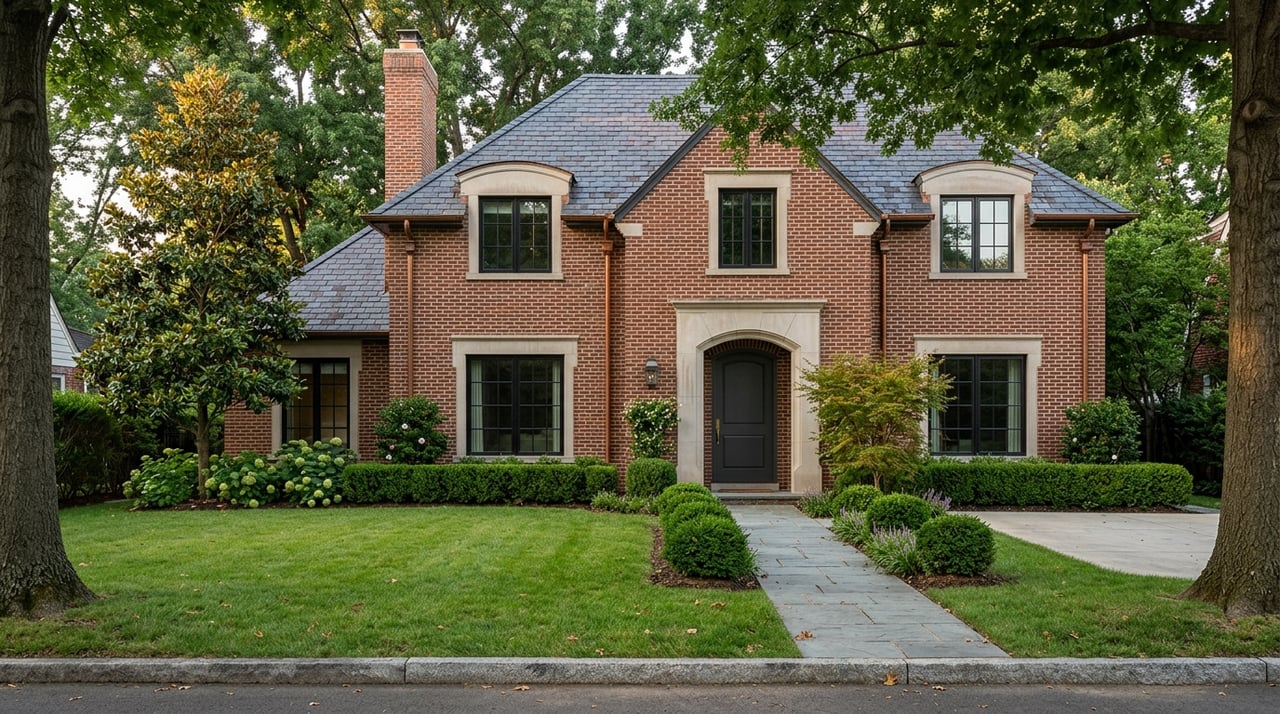
If Brookhaven feels easy to recognize but harder to sort out, you are not imagining it. In a compact city, a small shift in location can change the feel of your home search, from estate-scale streets to park-centered neighborhoods to more mixed-use, convenience-driven pockets. Understanding those differences can help you focus faster and choose an area that fits your day-to-day life. Let’s dive in.
Why Brookhaven feels so varied
Brookhaven’s 2024 comprehensive plan organizes the city into 14 character areas, including eight primarily residential areas and six activity centers. The city uses that framework to reflect differences in character, development period, land use, and future vision.
For buyers and sellers, that matters because Brookhaven is not just one uniform market. The city is compact, so changes in street pattern, lot size, housing type, nearby parks, and access to retail can noticeably shape how a neighborhood pocket feels.
Another helpful point is that Brookhaven says 75% of the city is within a 10-minute walk of a park. That means the key difference is often not whether you are near green space, but which park, retail node, or mixed-use area is closest to you.
Historic Brookhaven: classic and preservation-focused
Historic Brookhaven is the city’s traditional large-lot core, centered around Capital City Country Club. According to the city’s planning documents, it includes many pre-1940 homes designed by prominent Atlanta architects and is defined by large estate homes, broad front lawns, deep setbacks, and generous lots.
If you are drawn to a more established residential setting, this pocket often stands apart. It tends to appeal to buyers looking for traditional architecture and a quieter feel, with less emphasis on nearby walkable retail and more emphasis on long-standing neighborhood character.
The city’s planning vision here is preservation rather than denser redevelopment. That makes Historic Brookhaven one of the clearest examples of a pocket where the physical setting and long-term identity are tightly linked.
Ashford Park-Drew Valley: classic homes and active change
Ashford Park-Drew Valley is one of Brookhaven’s best-known single-family pockets. The area developed largely in the 1940s and 1950s, and the city describes it as historically made up of small homes on large lots.
Today, this is one of the places where you are most likely to compare different home types in the same search. You may see renovated cottages, teardown or rebuild opportunities, and newer infill homes within a relatively tight area.
That mix is part of what gives this pocket its energy. The city’s more recent planning guidance calls for preserving the area’s residential character while supporting commercial and mixed-use activity along Clairmont Road, with Brookhaven Village serving as a neighborhood commercial area for the east side.
What this pocket often means for buyers
If you want options, this pocket can offer a wide range of choices. You may be comparing lot size, renovation level, home age, and architectural style more directly here than in some of Brookhaven’s more uniform pockets.
It can be a useful fit if you want a single-family setting but still value proximity to neighborhood-serving retail. In practical terms, this is often where buyers weigh charm, future potential, and convenience at the same time.
Lakes District and Murphey Candler: green space first
The Lakes District is Brookhaven’s northern, park-oriented single-family pocket. City planning documents describe it as a collection of primarily single-family subdivisions from the 1950s and 1960s, along with homes from more recent decades, centered around Murphey Candler Park, Nancy Creek, and Silver Lake.
The mood here is often more recreation-driven than retail-driven. The city continues to emphasize preserving interior neighborhoods while improving access and connectivity to Murphey Candler Park, Nancy Creek, and Blackburn Park.
Murphey Candler Park is a major anchor in this part of Brookhaven. The city identifies it as Brookhaven’s largest park, with trails, a lake setting, a pool, tennis courts, a playground, and other recreation amenities.
Why this area stands out
If your daily routine includes trails, outdoor time, or a strong connection to larger park space, this pocket may rise quickly on your list. It tends to feel more shaped by natural and recreational amenities than by a nearby dining corridor or retail district.
For many buyers, that creates a different rhythm to home search priorities. Instead of leading with storefront access, you may lead with park adjacency, subdivision feel, and how the outdoor setting fits your lifestyle.
Lynwood Park: historic roots and a strong civic core
Lynwood Park has one of Brookhaven’s clearest historic identities. The city’s planning documents describe it as a historic single-family residential community with narrow lots and streets, and note its origins as a historically African-American neighborhood of small wood and cinderblock homes.
Over time, the area has also seen larger craftsman-style infill. In 2020, the city designated Lynwood Park as a local historic district, reinforcing its importance within Brookhaven’s broader story.
The park and community facilities are a major part of this pocket’s identity. The city says Lynwood Park includes a community center, basketball court, pool, tennis courts, playground, and mixed-use fields.
The feel on the ground
Compared with quieter estate or subdivision areas, Lynwood Park often feels more centered around shared neighborhood amenities. The civic and recreation presence gives it a more active neighborhood-hub quality.
For buyers, that can matter just as much as square footage or lot shape. If you value a pocket with visible community infrastructure and a distinct local history, Lynwood Park offers a different kind of Brookhaven experience.
Blackburn, Briarwood, and Brookhaven Heights: mixed-density choices
Some of Brookhaven’s most nuanced searches happen in and around Blackburn Park, Briarwood, and Brookhaven Heights-Brookhaven Fields. These areas are useful to think of as a transition zone, where housing types and neighborhood patterns can change quickly.
Around Blackburn Park, the city’s planning vision calls for a walkable neighborhood mixed-use center with pedestrian priority. The area already includes a blend of commercial, multifamily, townhome, and single-family uses.
Farther east, Brookhaven Heights-Brookhaven Fields remains mostly single-family, with relatively narrow lots and short setbacks. Older planning references also described Briarwood Park as a higher-density residential area built around apartments, condos, and townhomes, and while the city has redistributed that character area in its updated plan, you may still hear the older label used informally.
Briarwood Park remains an important amenity anchor. The city identifies it as having a community center, pool, tennis courts, and trails, which helps explain why this part of Brookhaven often feels more convenience-oriented and more attached-housing friendly than larger-lot pockets elsewhere in the city.
How to think about this area
This part of Brookhaven can be especially useful if you want flexibility in housing type. Depending on the exact location, you may be comparing condos, townhomes, multifamily living, or single-family homes within a relatively close radius.
That range makes it one of the city’s most practical pockets for buyers balancing maintenance level, access, and neighborhood feel. It is also a reminder that Brookhaven’s “pockets” are often best understood block by block, not just by a broad area name.
Buford Highway: urban edge and multicultural energy
The Buford Highway corridor is one of Brookhaven’s most distinct areas. The city’s 2024 plan describes it as a corridor that combines diverse commercial development and multifamily housing, with future planning focused on a greener, more thriving, multicultural hub that balances legacy businesses and new development.
This pocket stands apart from Brookhaven’s more traditional single-family areas. If your search is oriented toward attached living, quick access to a wide variety of dining, and a more urban-edge setting, this corridor may feel especially relevant.
It is also one of the clearest examples of how Brookhaven includes very different living patterns within one city. Instead of a cottage-to-estate progression, the comparison here is more likely to center on multifamily options, convenience, and the character of the commercial corridor itself.
The lifestyle anchors that shape each pocket
In Brookhaven, nearby lifestyle anchors often shape your experience as much as the home itself. Explore Brookhaven describes Dresden as a place for local restaurants, cocktail bars, and boutiques, Town Brookhaven as a spot to shop, dine, and unwind, Buford Highway as a culturally diverse culinary corridor, and Brookhaven City Centre as a central community hub with MARTA convenience.
Those nodes can help explain why two homes with similar square footage may feel connected to very different routines. One may be more tied to parks and trails, while another is more tied to dining, mixed-use activity, or transit convenience.
The city’s park system adds another layer of distinction. Brookhaven Park offers open lawn space and dog-friendly features, Ashford Park is known as a neighborhood green space, Blackburn Park offers trails and fields, Briarwood Park and Lynwood Park are anchored by recreation facilities, and Murphey Candler brings lake and trail amenities on a larger scale.
A simple way to narrow your search
If you are trying to make sense of Brookhaven quickly, it can help to match neighborhood pocket to your preferred rhythm of daily life.
- Historic Brookhaven often aligns with buyers seeking estate-scale homes, prewar architecture, and a preservation-oriented setting.
- Ashford Park-Drew Valley often works for buyers comparing original homes, renovated properties, and newer infill in one search area.
- Lakes District and Murphey Candler often appeal to buyers who want a park-first, recreation-driven environment.
- Lynwood Park often stands out for its historic identity and strong community amenity base.
- Blackburn, Briarwood, and Brookhaven Heights can suit buyers who want mixed-density options and a more convenience-oriented setting.
- Buford Highway may be the right fit if you are looking for attached housing and a more urban, dining-connected experience.
That kind of framework is often more useful than searching by city name alone. In Brookhaven, the finer-grain differences are where much of the real character lives.
If you are weighing where to focus in Brookhaven, local context matters. The right guidance can help you compare not just homes, but the feel and long-term fit of each pocket. To explore Brookhaven with a team that knows Atlanta’s neighborhoods in detail, connect with Dorsey Alston REALTORS®.
FAQs
What makes Brookhaven neighborhoods feel different from one another?
- Brookhaven’s planning framework identifies 14 character areas, and the differences often come down to housing type, lot pattern, development era, nearby parks, and access to retail or mixed-use nodes.
Which Brookhaven pocket is most known for large estate homes?
- Historic Brookhaven is the city’s best-known large-lot, estate-scale residential pocket, with many pre-1940 homes, deep setbacks, and a preservation-focused planning vision.
Which Brookhaven area is most connected to Murphey Candler Park?
- The Lakes District is the Brookhaven pocket most tied to Murphey Candler Park, Nancy Creek, and other recreation-oriented amenities.
Which Brookhaven pocket has the widest mix of older homes and newer infill?
- Ashford Park-Drew Valley is one of the clearest examples of that mix, with older 1940s and 1950s homes, renovated properties, teardown opportunities, and newer infill homes.
Which Brookhaven area is most associated with attached housing and convenience?
- The broader Blackburn, Briarwood, and Brookhaven Heights area is one of Brookhaven’s most mixed-density zones, with a blend of multifamily, townhome, and single-family options in nearby pockets.
Which Brookhaven pocket feels most urban and dining-focused?
- The Buford Highway corridor stands out for multifamily housing, diverse commercial development, and strong access to a wide variety of dining options.