Who pays for the Duck Pond between Peachtree Road and Lindbergh Drive? Not the City of Atlanta. The pond, its banks, the two stone bridges and the lawns below Lakeview Drive belong to the residents of Peachtree Heights East. A widow deeded the land to them in 1933, and the people who live on the surrounding streets have been paying for its upkeep ever since.
The historical marker at the water's edge says the parks are open to the public. It also says that what keeps them open is community work days, neighborhood association dues and fundraising by the Ladies of the Lake Garden Club. Over the past hundred years, most of that money has gone to one problem: silt.
The neighborhood came first, and the pond came 13 years later
Peachtree Heights East began as a 1906 land purchase by Eretus "Petie" Rivers, a former railroad man turned developer, and Frank C. Owens, president of Southern Land Co. The New York firm Carrère and Hastings designed the plan. The marker's inscription on the Historical Marker Database dates the first lot auction to July 19, 1909, and calls it the first planned neighborhood in what is now Buckhead. The neighborhood association's own history puts the auction a month earlier, on June 19.
The 1909 plan set aside parkland. It did not include a pond. The Peachtree Heights East Neighborhood Association's park history cites 1922 minutes of the Peachtree Heights Community Club that credit two residents, Henry Jacobs and Nat Sage, with building the "lake." Rivers died in 1932. A year later, his widow, Una Rivers, deeded the pond and the parks around it to the neighborhood in perpetual trust.
"After Mr. Rivers' death in 1932, his widow, Mrs. Una Rivers, deeded the 7.35 acres of park and pond to the residents of Peachtree Heights with the stipulation that it be preserved in perpetuity."
The deed kept the parkland in the neighborhood's hands. It did nothing about the water that feeds the pond.
Why the water keeps bringing the bill back
The 7.35 acres are split into three parks: Duck Pond Park, the Middle Park and the Lower Park. The pond covers about 2 acres. Two streams and several springs feed it, and a dam that also carries Lakeview Drive holds it in place. Water leaves through a spillway under Lakeview, runs as a creek through the Middle and Lower parks, goes into a pipe under Lindbergh Drive and reaches Peachtree Creek about a mile south.
The streams that fill the pond also carry silt into it, and the association says that silt "quickly collects" and calls for frequent dredging. The neighborhood's records show the problem returning roughly once a generation.
| Year | What happened at the pond |
|---|---|
| Late 1920s | Residents paid for the first dredging |
| Early 1930s | Fulton County installed large culverts under Peachtree Way, which let silt into the pond |
| 1934 | The trustees asked the county to dredge, and it did |
| 1938 | Silt had filled the pond again, and the trustees called the county again |
| 1949 | The pond was in bad shape and the trustees had no money for the work |
| 1952 | The Community Club re-formed and brought funds to the project |
| 1969 and 1975 | Dredging again |
| 1985 to 1986 | Street runoff and silt led to spillway improvements |
| 2001 | A major restoration, funded by neighbors, was completed |
The 1949 entry shows how this arrangement can fail. In a privately held park, the pond's condition depends on whether the neighborhood has money that year. In 1949 it didn't, and nothing happened until neighbors organized again.
What the 2001 rebuild changed
In 1999, Peachtree Heights East neighbors started a capital campaign called the Duck Pond Century Plan with a $500,000 goal. More than 400 contributions from neighbors and friends brought in $440,000. Work ran through the summer and fall of 2001.
Much of what a walker sees at the Duck Pond today dates from that project:
- Dredging of the pond, the streams and the silt ponds
- Two stone bridges over the creeks that feed the pond
- Silt pond dams and waterfalls
- 650 feet of stone retaining walls, about two-thirds of the pond's edge
- 1,000 feet of bank reinforcement and plantings
- A Landscape Master Plan, with new trees and shrubs
The silt ponds and catch basins changed how the work gets done. Silt now settles upstream before it reaches the main pond, and the association dredges the two silt ponds every other year. The older pattern was to wait until the pond itself filled.
The upkeep still costs money. A 2011 project dredged both silt ponds, hauled away the sludge, laid 32,000 square feet of sod and installed irrigation over about 50,000 square feet. It cost $53,000. Individual and organizational donations covered $29,500, a matching grant from Park Pride covered $20,000, and the association put in $3,000. A park risk assessment study the next year brought the two-year total to about $60,000.
Other projects are easy to miss on a walk. They include electric bubblers that cut down algae and duckweed, a daffodil glade in the Middle Park, and enrollment in the Upper Chattahoochee Riverkeeper community water testing program for the two feeder streams. There are also 48 new hardwood and evergreen trees, planted under City Arborist rules to replace mature trees removed when the Cathedral of Christ the King built on its Peachtree Road campus. The cathedral, a French Gothic church dedicated in 1939, is the neighborhood's best-known neighbor.
The annual budget, and who covers it
The association now puts routine maintenance at more than $30,000 a year and calls that "a big bill for a small neighborhood." The marker counts about 335 homes in Peachtree Heights East. The money comes from two places: association dues and the annual Garden Party held by the Ladies of the Lake Garden Club. The club held its first Garden Party at the Duck Pond in 1985 to raise money for park maintenance.
According to its own history, the club has been around in some form since at least the 1930s. It formally organized in 1974, and in 2011 it set up the Ladies of the Lake Foundation, Inc., a 501(c)(3), to handle fundraising. The club takes care of the traffic triangle plantings and the perennial garden at the Demorest side bridge. Its $85 annual membership helps pay for neighborhood traditions, including the Fall Festival & Pumpkin Float, the Easter Egg Hunt, a Holiday Party and a Block Party.
The next of those traditions comes up soon. The association's calendar lists the Fall Festival for Sunday, October 25, 2026, from noon to 8 p.m. at Upper Park. It is a neighborhood event run by the people who look after the grounds, so it's best to think of it as their fall tradition and not a citywide festival.
The November 7 tour starts at the marker
On Saturday, November 7, 2026, at 10 a.m., Buckhead Heritage and the Atlanta Preservation Center will lead the Peachtree Heights East Movers, Shakers, and Heartbreakers Tour. Buckhead Heritage Executive Director Richard Waterhouse is the guide.
- Meet at the Duck Pond's historical marker.
- Expect a hilly route of about a mile and a half that takes roughly an hour and a half.
- The group stays on the road the whole time.
- Register with Richard Waterhouse at (404) 467-9447 or [email protected].
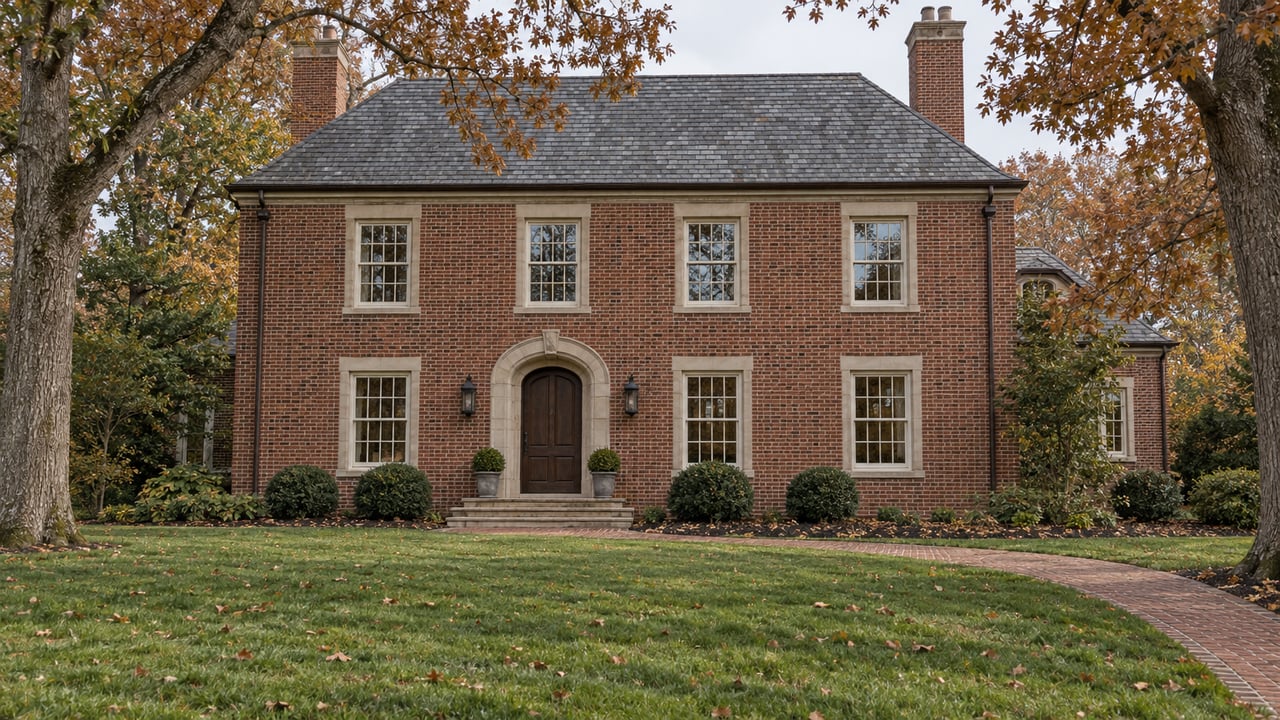
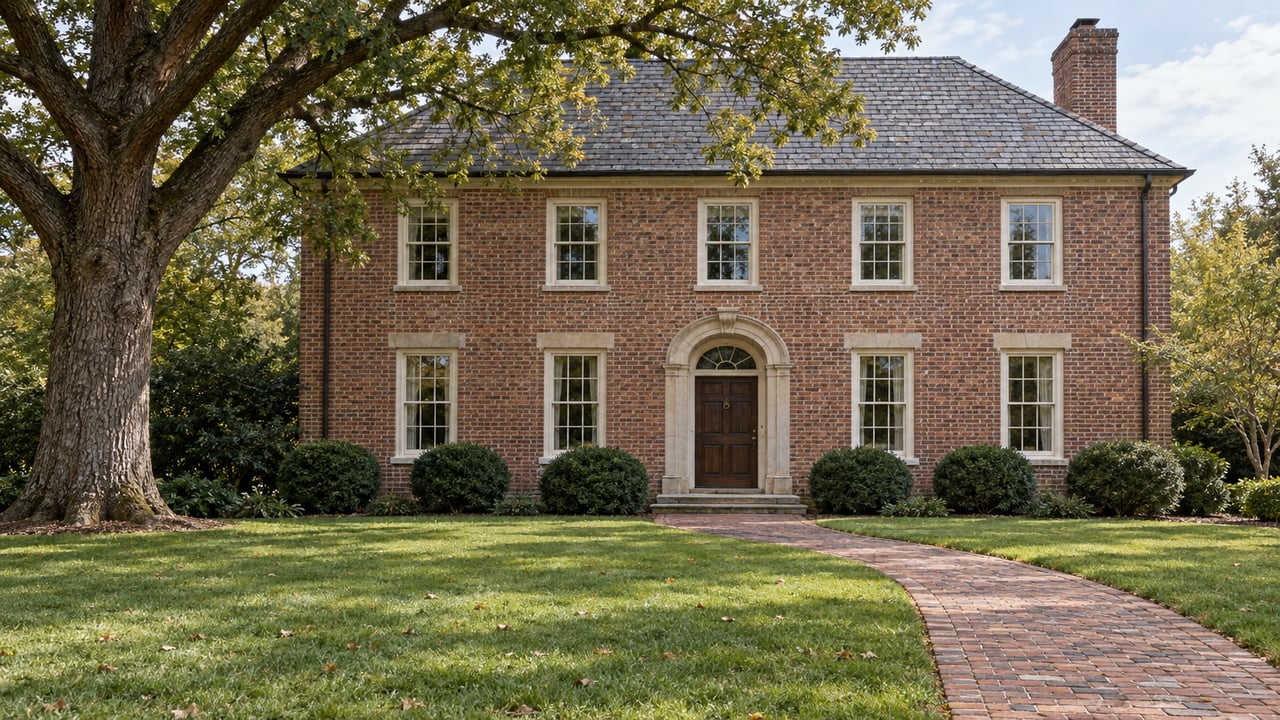
The announcement says the walk will show examples of the neighborhood's house styles, which run from early 20th-century four-squares, Craftsman bungalows, Cape Cods and Tudor Revivals to ranches and 21st-century homes. The marker adds that several early houses were built from Sears and Roebuck kits. Many original builders were family members who put up two homes with a shared driveway.
The event notice doesn't list stops. Buckhead Heritage's earlier Peachtree Heights East walking tour gives a sense of the history on these streets:
- Flannery O'Connor lived for a time at 2525 Potomac Street. The house no longer stands.
- Hamilton Douglas Jr. lived at 120 Lakeview Avenue. His sister, Ellen Douglas Mankin, lived next door and was the first woman from Georgia elected to the U.S. House.
- Actress Susan Hayward had a home at 152 Peachtree Way during her marriage to Georgia rancher Eaton Chalkley.
- Neel Reid designed the 1912 Porter family house at 2612 Parkside Drive.
- Burge and Stevens designed Joseph and Nell Winship's 1925 Tudor Revival at 2626 Brookwood Drive.
Two of those addresses, Lakeview and Peachtree Way, are on the streets that frame the pond. The dam holding the water carries Lakeview Drive, and in the early 1930s the county's culverts under Peachtree Way let the silt in.
For lunch after the walk, Roshambo is on Peachtree Road at 2355 Peachtree, in Peachtree Battle Shopping Center, next to Holeman & Finch Bottle Shop.
Two more Buckhead Heritage evenings this fall
Buckhead Heritage's speaker series meets in the Gould Room at the Cathedral of Saint Philip, and admission is free. On Thursday, October 22, at 7 p.m., Julia Forbes, associate director of institutional research at the High Museum of Art, will talk about the museum's centennial, which Buckhead Heritage dates to October 18, 2026. On Thursday, November 12, at 7 p.m., W. Wright Mitchell, president and CEO of The Georgia Trust for Historic Preservation, will discuss his book on John Adam Treutlen, Georgia's first elected governor.
The association says the parks still face the same threats as always: old trees that are expensive to care for, aging infrastructure, storm erosion along the banks, and silt that keeps arriving from upstream. It accepts tax-deductible contributions for that work.
At Dorsey Alston Realtors, we've worked in Buckhead since 1947, and places like the Duck Pond are part of why we stay close to its neighborhood associations, garden clubs and preservation groups. If you'd like to know more about Peachtree Heights East, its history or the streets around the pond, our agents would be glad to talk. Work With Us.